
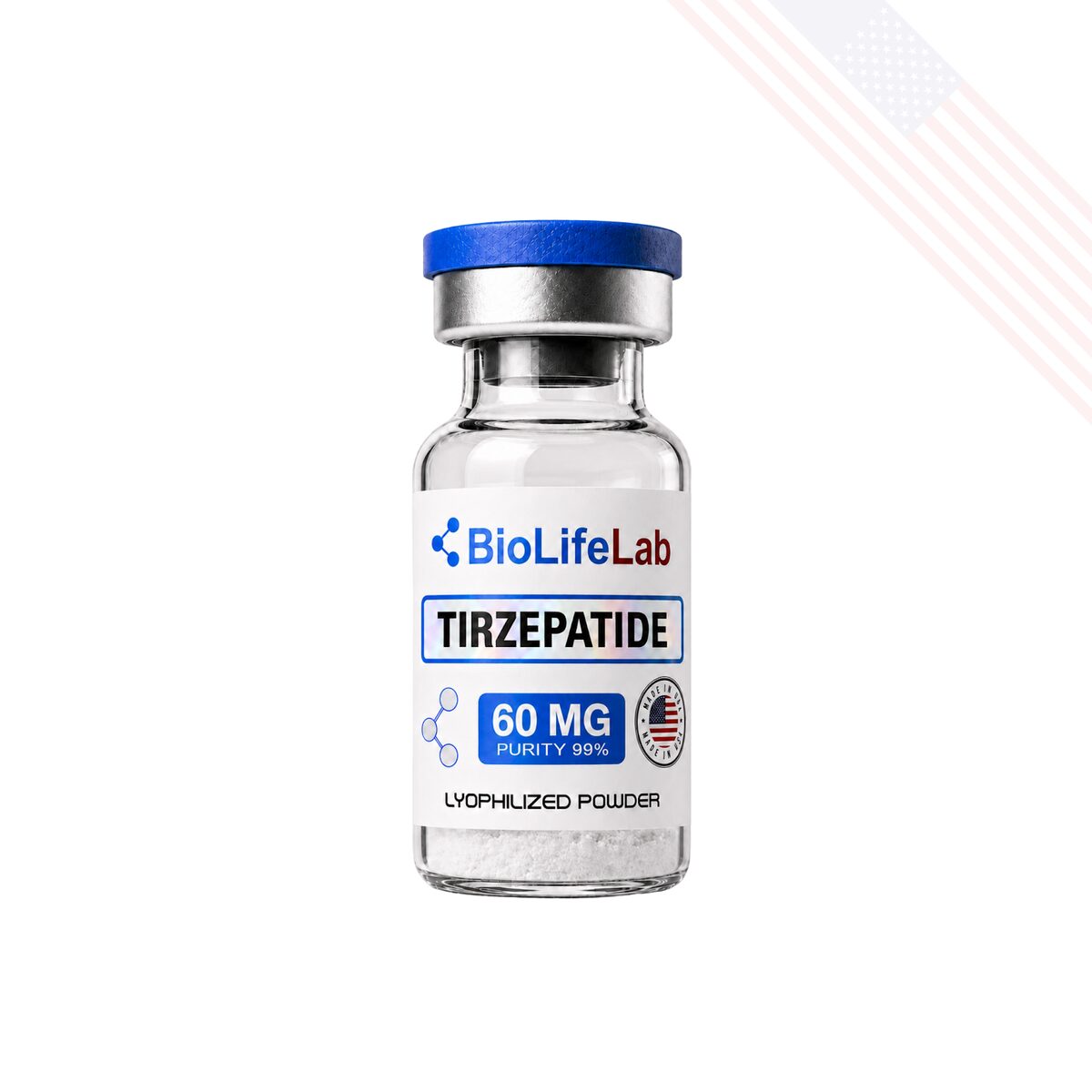
Tirzepatide
Tirzepatide
$117.65 – $529.40
For laboratory research use only · Not for human or veterinary use
Research use only · Lyophilized · 99% purity
Lyophilized powder sealed in tamper-evident vials and shipped with tracking. Supplied to qualified laboratories, academic institutions and independent investigators — strictly for in-vitro research.

Every compound is supplied as a lyophilized powder to the same stated specification, in a range of ampoule sizes. The size you pick is really a question of how much material a protocol will consume before the vial is opened again.

Purity is one line on a specification, and it is the line every supplier leads with. It is worth knowing what that number covers, what sits outside it, and which questions it was never meant to answer.
A 99% figure normally comes from HPLC and describes how much of the sample sits under the main peak. It is a proportion of what was injected — not a statement about what the remaining 1% is.
Why it matters: two lots can share a number and differ in what makes up the remainder.Lyophilization pulls water out by sublimation, and a second drying stage takes residual bound moisture down further. Whatever is left is a separate specification from purity.
Why it matters: moisture is what shortens the shelf life of a sealed vial.A purity assay measures how much of one thing is present. Confirming that the thing is the sequence you ordered is a different measurement, normally by mass spectrometry.
Why it matters: a pure sample of the wrong compound still reads 99%.Any purity figure belongs to the lot it was measured on. Whether the next vial matches is a question about consistency, which only repeat measurement answers.
Why it matters: a protocol validated on one lot has to survive the next one.Every BioLifeLab vial leaves as a freeze-dried powder under a tamper-evident closure, labelled for laboratory research use only — so what arrives is what the specification describes.
One specification across the range. Pick a family to see the compounds and the ampoule sizes each one ships in — anything not yet listed is quoted on request.
Dual GIP/GLP-1 receptor agonist, from a 5 mg ampoule for method development up to 120 mg for a full programme on one lot.
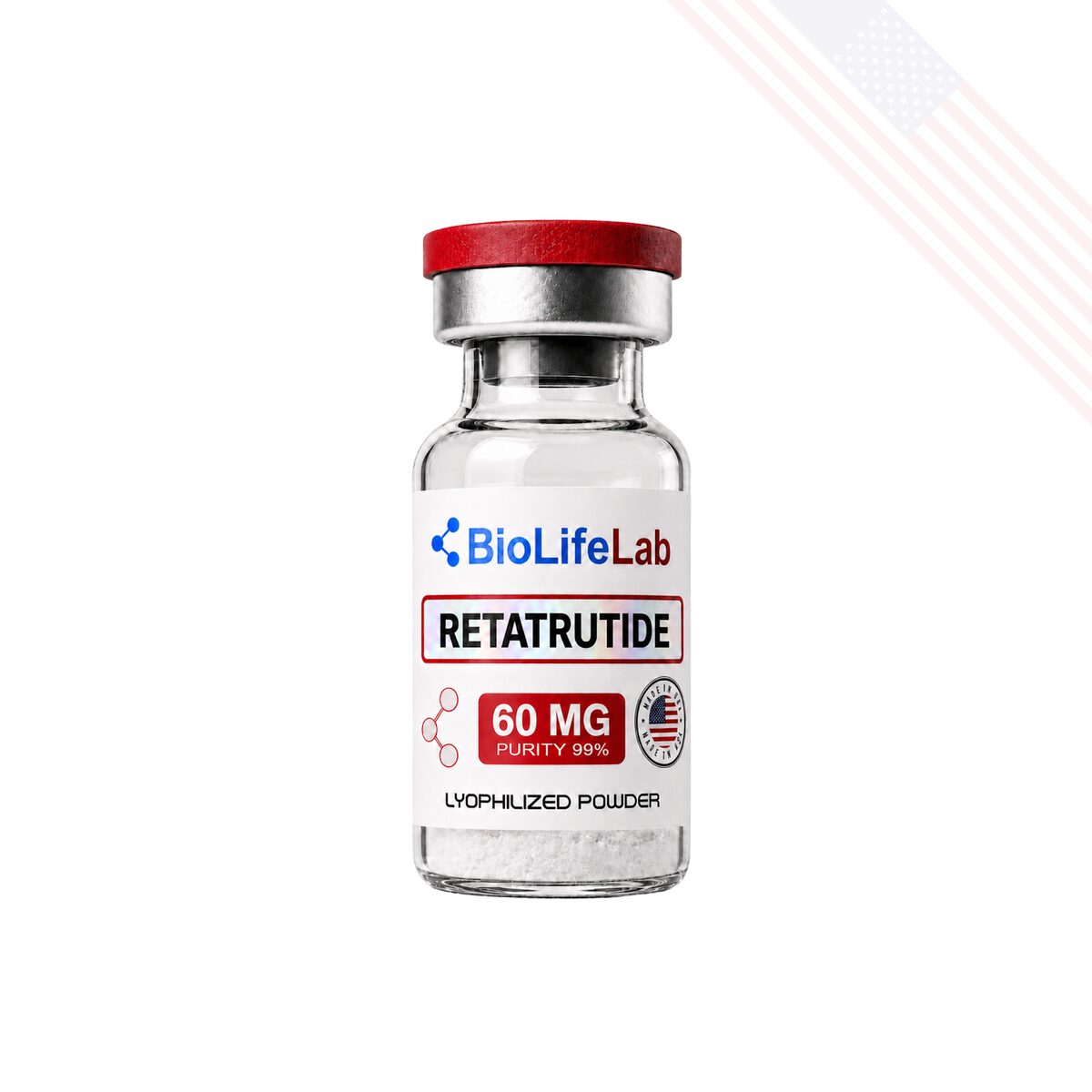
1 compound BrowseTriple receptor agonist across the same ampoule range, to the same stated specification.
1 compound BrowseBPC-157, tesamorelin, MOTS-c, ipamorelin, the HGH fragments and the wider research list.
31 compounds BrowseCombined-compound ampoules prepared to a single fill, so one vial covers a paired protocol.
6 compounds BrowseNAD+, B12 and D3 ampoules alongside the peptide range.
4 compounds BrowseBacteriostatic water, syringes and the lab supplies that go alongside a peptide order.
On request Ask about availabilityTirzepatide, retatrutide, the wider peptide range, blends and NAD+ — all lyophilized to the same stated specification, so a programme can add a compound without changing supplier.
43 compoundsSupplied as a white to off-white freeze-dried powder in a vial closed under a tamper-evident seal, so the closure itself shows whether it was disturbed.
Tamper-evidentEvery vial in the range carries the same 99% purity figure on its printed label rather than in a footnote.
99% statedOn tirzepatide, price per milligram drops from $20.00 at 5 mg to $3.75 at 120 mg, so the ampoule you choose is a question about protocol length.
5.3× spreadProducts are labelled and sold for laboratory research use only, not for human or veterinary use.
RUOPhone and email reach the same team that handles the orders, including bulk and repeat schedules.
Direct contactA peptide is a short chain of amino acids, and in solution it is fragile — moisture and temperature degrade it steadily. Lyophilization removes the water without the material ever passing through a liquid phase: the solution is frozen below −40 °C, then the surrounding pressure is dropped so the ice sublimates directly to vapour. A second drying stage pulls residual bound moisture down further before the vial is closed.
What is left is a dry powder that can sit sealed far longer than the same peptide in solution. That is also why handling advice changes the moment a vial is opened. In its lyophilized state the compound is stable; reconstituted, it is not, and it should be prepared only in the quantity a protocol actually needs.
Sealed vials keep between 2 and 8 °C in a cool, dry place, shielded from direct sunlight. The tamper-evident closure is part of the specification rather than packaging: if a seal is already broken when the vial arrives, that vial should not be used, and we will replace it against photographs.
Ampoule size is the variable worth planning against the protocol rather than against the unit price. A small ampoule suits method development, where material is consumed slowly and a fresh reconstitution is cheap. Larger ones lower the cost per milligram sharply — on tirzepatide it falls from $20.00 at 5 mg to $3.75 at 120 mg — but they only pay off when the work will consume them before stability, not budget, becomes the limit.
If the work runs for months, the questions change: how much material a lot has to cover, how often it is reordered, and what the paperwork needs to say. Those are worth a conversation rather than a checkout.
Lyophilized tirzepatide is the peptide freeze-dried to a dry powder. Freezing the solution and then sublimating the ice under vacuum removes the water without a liquid phase, which is what lets the peptide stay stable in storage. It is reconstituted with a suitable solvent when the research protocol calls for it.
Every vial in the range ships at 99% purity as a white lyophilized powder, manufactured by Neopure Bioscience and sealed under a tamper-evident closure.
Smaller vials suit method development, where material is spent establishing a reconstitution protocol. Larger vials lower the cost per milligram and keep an extended run on a single lot, which removes lot-to-lot variation as a variable.
Store the sealed vial in a cool, dry place away from direct sunlight, between 2 and 8 degrees Celsius. Once reconstituted a peptide is far less stable than in its lyophilized state, so prepare only what the protocol needs.
No. Everything sold here is supplied strictly for laboratory research use. These are not FDA approved medications, they are not intended for human or veterinary use, and they are not intended to diagnose, treat, cure, or prevent any disease.
